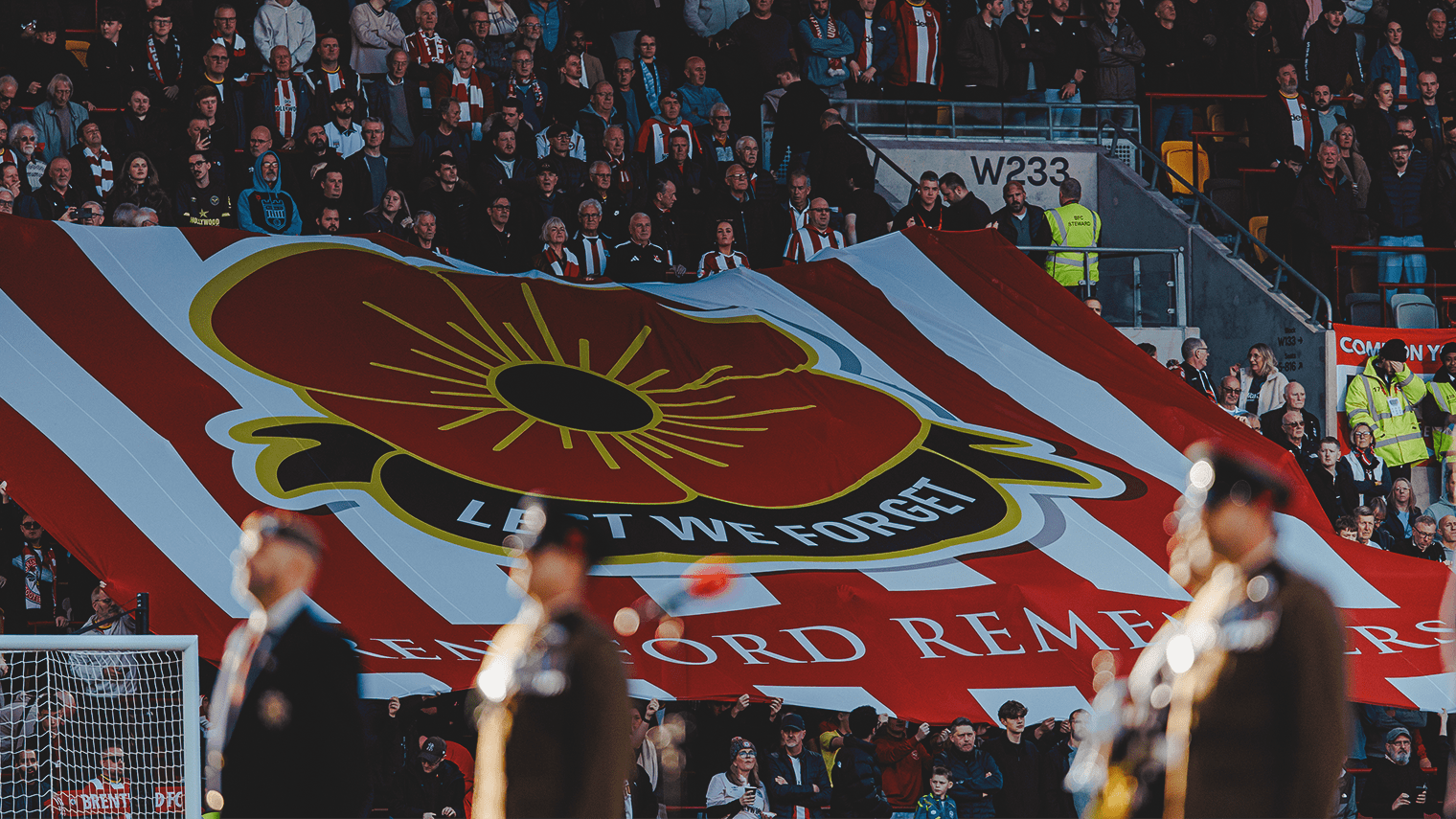
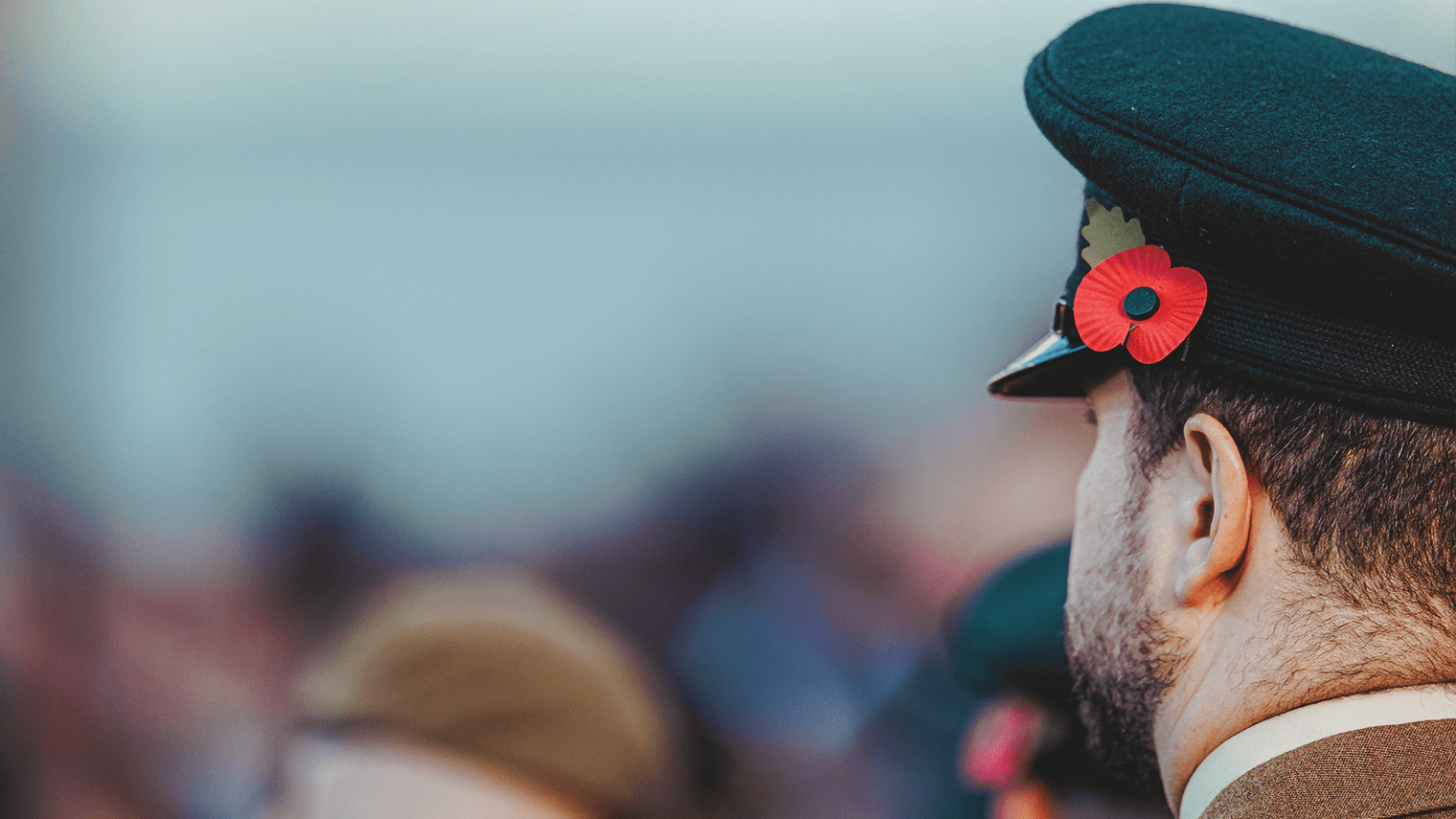
At 11am today, the UK will fall silent to mark Armistice Day, 108 years on from the end of the First World War.
Jonathan Burchill – Bees United History and Heritage, author of A Pub On Each Corner and contributor to the Beesotted podcast – has explained the impact of the two World Wars on Brentford and the stories behind the Bees winning at Wembley for the first time in 1942.
From a footballing perspective, the legacy of the two World Wars on Brentford’s history cannot be understated.
During the summer of 1914, war clouds were looming over Europe, before Britain declared war with Germany on 4 August. The following day, seemingly unaffected by these events, Brentford players returned to Griffin Park in anticipation of the new season in the Southern League Second Division.
The first game of the season was overshadowed by the unusual spectacle of a section of the crowd running across the Griffin Park pitch during the half-time interval to hear an army sergeant delivering a recruiting address on the New Road side of the ground. The break was extended for some time so as not to bring the speaker’s efforts to an abrupt ending.
November’s game against Abertillery saw Brentford’s largest-ever victory in a competitive game, 10-0, although in front of just 400. However, this result was later expunged from official records when Abertillery were unable to complete their league fixtures.
The season did eventually reach its conclusion but had become something of a farce as players were increasingly called up for the war effort.
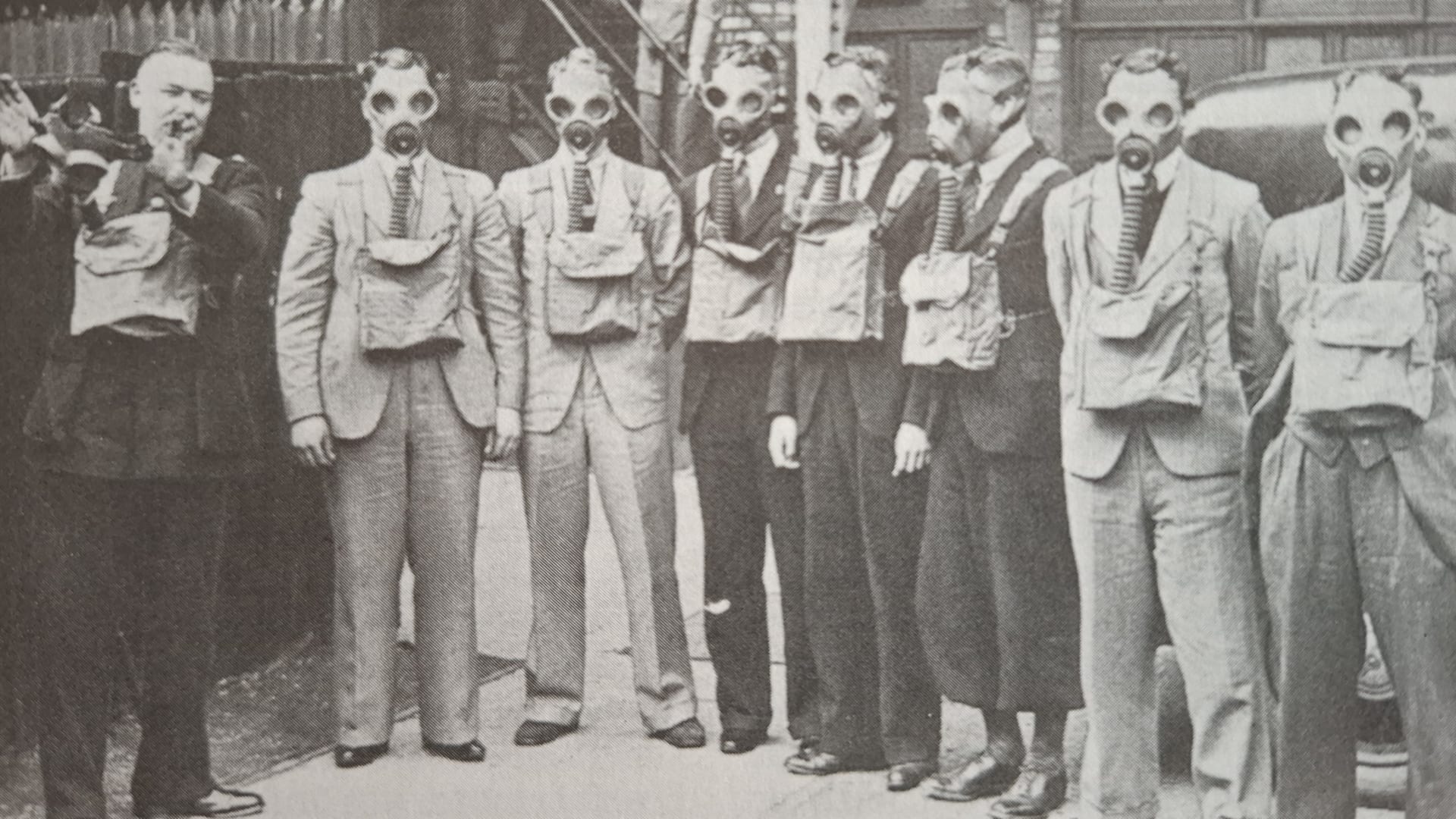
For the remainder of the war, leagues were organised on a regional level with clubs able to call upon ‘guest’ players from other teams, if they were located nearby with their regiments.
This arrangement benefited Brentford as a number of guest players went on to make a significant impact, resulting in the Bees winning the 1918/19 London Combination.
In anticipation of a return to regular league football in 1919/20, the Southern League decided to expand their top tier by two clubs. A number applied, with Brentford’s application being successful, reflecting wartime results.
The value of this ‘promotion’ was further enhanced a year later when the Football League itself decided to create a new Third Division, taking all of the Southern League’s First Division into the new tier. Effectively the club had back-to-back promotions without kicking a ball.
Within 15 years, under the guidance of secretary-manager Harry Curtis, the Bees were in the top tier of English football. Not unlike the more recent arrival in the Premier League, the club settled in quickly and finished fifth in the first season (still its highest-ever league finish) followed by two sixth-place finishes.
Brentford’s third season also saw the club reach the quarter-finals of the FA Cup for the first time, where they were joint favourites to win the competition. Alas, defeat to Preston ended the dream.
The fourth top tier season ended in a disappointing 18th place (out of 22), which prompted Brentford to become one of the top spenders in the country in bringing in new players. With hindsight, the summer of 1939 probably wasn’t the best timing.
Season 1939/40 started as normal, with the addition of players now wearing numbers on their shirts. However, with three games played, the players were in Curtis’ office at Griffin Park when Prime Minister Neville Chamberlain announced on the radio that the country was again at war.
On the following Sunday, 22 double-decker buses parked up in Braemar Road and Clifden Road, soon to be filled by local schoolchildren on their way to be evacuated outside of London, as part of ‘Operation Pied Piper’.
The football season was suspended, and later the results from the three games played were expunged from official records. The FA and Home Office were initially prepared to allow friendly matches, although not in some parts of the country like London, including Brentford.
Two weeks into the war, the government recognised that football could provide a welcome distraction, as well as a means to raise funds, so the location rules were relaxed.
For safety’s sake, there was a crowd limit of 8,000, or half the capacity of the ground, whichever was fewer.
Brentford immediately arranged a game against Arsenal and distributed 8,000 free matchday programmes which allowed admission.
Regional leagues then again became operational. All the players’ contracts were cancelled (although the club retained the players’ registrations), along with the five-year contract recently signed by Curtis.
In the early days, the players and Curtis turned their efforts to supporting local needs, including turning out in force to the Brentford hospital. They worked for several days, digging trenches and filling sandbags to protect the hospital building.
Curtis used his organisational skills to put on a Christmas concert at the Forum Cinema in Ealing, raising a £200 cigarette fund for the troops.
An air raid shelter, to accommodate 260 people, was prepared at Griffin Park.
As with the First World War, clubs were again allowed to field guest players (Matt Busby turned out once for the Bees), although regular players would appear whenever they were able. This was typified in 1940 by centre-forward Tommy Cheetham, who played when he was on leave from the army despite the fact he had been injured at Dunkirk and had a piece of shrapnel removed from his leg.
Air raid warnings were common, delaying or postponing matches. Later during the conflict, grounds had an air raid ‘spotter’ on a stand roof to look out for enemy aircraft.
A game against Chelsea at Griffin Park was postponed ‘owing to civil defence requirement’. As part of the government’s control of information, no further details were allowed to be published by newspapers at the time.
It later transpired that a time bomb had landed in Braemar Road. The press couldn’t even mention the weather in case it could assist the enemy. A match report later in the war made reference to “Messrs Fahrenheit and Centigrade being in the ascendant”, to convey the fact it was a hot day.
At the end of 1940, club directors remained relatively optimistic, even though almost every match played had incurred a considerable financial loss. The option to temporarily close down the club was rejected, as it was felt that continuing was good for the game.
The introduction of two new cup competitions – the London War Cup and the Football League War Cup – was hoped to stimulate a keen competitive spirit among the teams and interest among supporters.
The 1941/42 season started with Brentford, plus 14 other southern clubs including Arsenal, Tottenham and Chelsea, resigning from the Football League. This group of clubs felt they could run a better league competition with less travelling, even though they ran the risk of not being reinstated when peace returned (which they duly were).
Before the opening game of the season, Curtis made an announcement over the Griffin Park Tannoy that, “Wartime football is worth a visit whenever such relaxation does not interfere with the calls of national service.”
“Wartime football is worth a visit whenever such relaxation does not interfere with the calls of national service”
The latter part of the season was given over to the London War Cup. Brentford duly finished top of their group before beating Arsenal in the semi-finals after a replay, setting up the final against Portsmouth at Wembley Stadium.
Pompey were the holders of the FA Cup, having won it in 1939 in front of a crowd of 99,370. They would include six members of that side for this match.
As well as the Brentford team making their way to the old twin towers, somewhat bizarrely so did the Griffin Park goalposts and crossbars, which were dismantled before being re-erected at the national stadium. They were returned the following Wednesday.
On the day of the final, Brentford were assigned the ‘lucky’ number one dressing room, which had housed the winning side in a number of pre-war cup finals. The 69,792 crowd was the largest to see a Brentford match at that point.
Brentford winger Leslie Smith almost missed kick-off as his car broke down on the way to Wembley and it was only thanks to the local police giving him a lift, with sirens blaring, that he made it on time.
He went on to be the Bees’ hero, scoring both goals in a 2-0 win, although Portsmouth did have a tame penalty which was easily saved.
For Smith’s second goal, he took the ball in his stride a few minutes before the final whistle, flashed down the wing and mesmerised the Portsmouth defence before scoring one of the most audacious goals ever seen at Wembley.
It was perhaps fitting that Smith took the headlines as he had grown up in South Ealing and was a supporter of the club, previously standing on the Ealing Road terrace for matches. He went on to join the club as a promising 16-year-old, whilst working as a junior clerk in the club offices.
Having established himself in the Bees’ first team, he won his only England cap pre-war when selected in place of the injured Stanley Matthews. Like so many of his contemporaries, the war years fell during the peak of his career, and his 13 wartime international caps only go some way to recognising his ability.
When he eventually left Brentford for Aston Villa after the war, Curtis was particularly sorry to lose him, saying, “In all my 23 years in football, I have transferred scores of players but from both a sentimental and playing point of view, this will be the greatest wrench.”
One concession to Smith was letting him take his lucky boots with him, even though they had 15 patches on the uppers, as ‘make do and mends’, and were officially the property of Brentford FC.
Joe James had the honour of leading the Brentford team up Wembley’s famous steps and remains the only Bees captain to receive a cup for a knockout tournament at the national stadium. Although he nearly dropped the cup when it was presented to him!
The cup winners duly returned to Griffin Park and then visited the Duke of York pub, on the Great West Road, for a modest supper. The War Cup itself was filled with wine and passed around the room by the players, after which supporters who had gathered outside were also able to have a sip from the trophy.
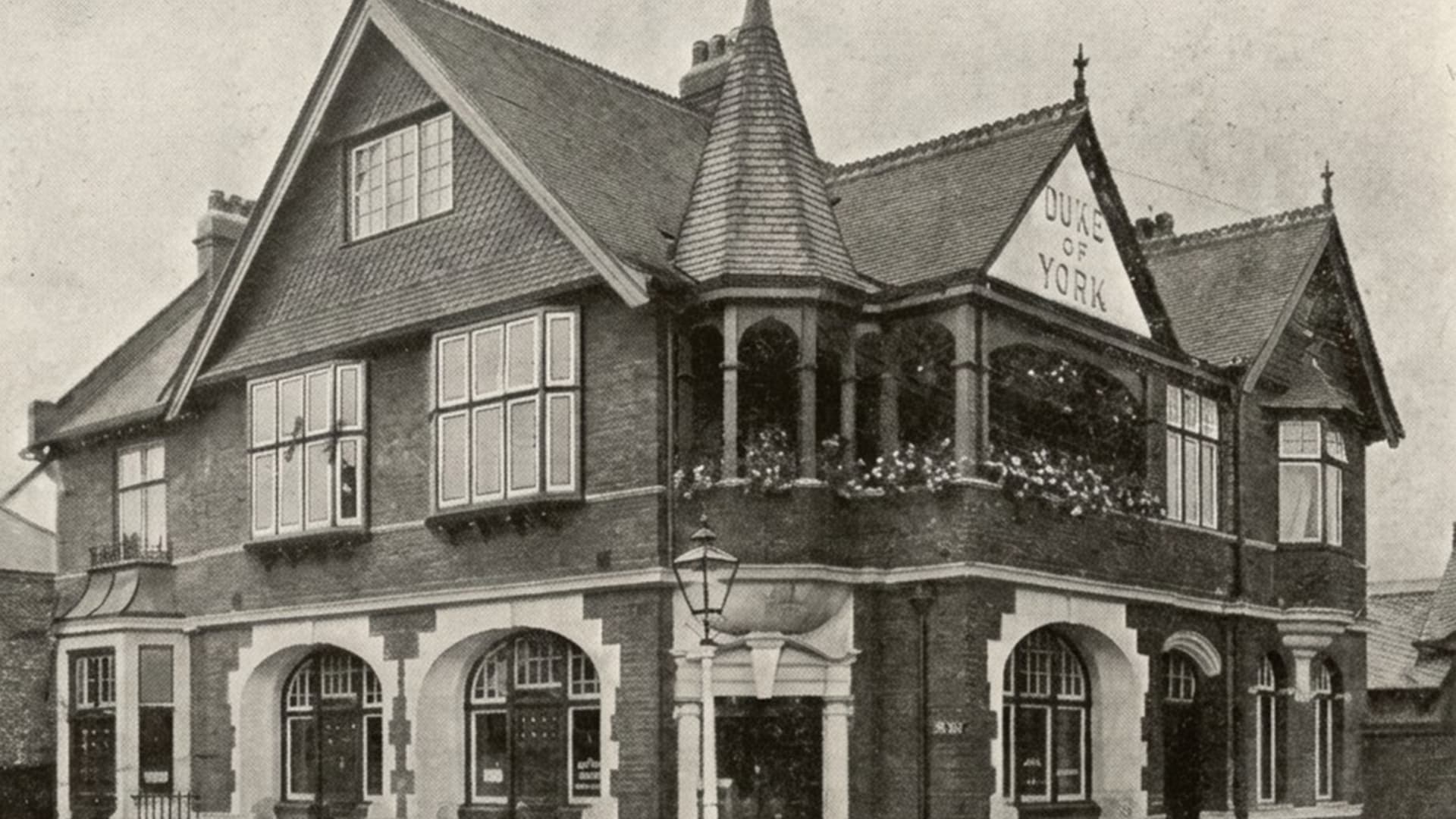
The following day, the cup was on show at the Green Dragon Inn, in Haddenham, where Curtis’ brother and his wife resided.
Both clubs received about £2,500 as their share of the £15,500 gate receipts. The players received their expenses plus some war savings certificates for winning, although no medals were presented.
Later in 1942, Griffin Park hosted a match between ‘Holland’ and Belgium which was broadcast on BBC radio’s Programme for the Forces.
Tragically, in February 1943, Curtis received a letter from Vera Saunders, wife of Bees player Percy (25). She advised that her husband was now presumed dead, having been ‘missing’ since the ship he was travelling on was lost as a result of enemy action a year earlier.
Percy was one of the new signings for the aborted 1939/40 season, becoming the first wearer of the no. 10 shirt. He transpired to be the only current player to lose their life in the war.
Team selection remained an ongoing challenge, but Dai Hopkins turned up for a match in 1944 despite the fact his home had been badly blitzed by a flying bomb.
In June 1945, a Labour Party candidates’ rally, hosted by Ernest Bevin, took place at Griffin Park ahead of the forthcoming general election. He highlighted that there had been three million marriages during the war and not 10 per cent of those young people had homes. He was concerned that when men came back from the war, five million new homes would be needed.
The team flew from Croydon Airport to play a match against the army in Hamburg in September 1945, in response to Field Marshal Montgomery’s request for more leading league clubs to entertain the troops.
Finally, after seven years, the Football League returned in 1946/47, with the same fixture list as the suspended one in 1939, and Brentford were finally able to take on their fifth season in the top tier, in a 12-year span. However, many players were now well into their 30s and this proved a factor as the club tumbled to relegation, culminating in just one win from the final 17 games.
It is notable that, to date, the club’s only successes at Wembley, in 1942 and the 2021 play-off final, fell in seasons where the national situation took precedence, meaning many supporters were unable to attend. Both memorable days are tinged with sadness at those we lost in the wars and during the pandemic.